
Plans are now underway for Kenya Electricity Generating Company (KenGen PLC) to develop the High Grand Falls Multipurpose Dam on the Tana River located between Tharaka Nithi and Kitui counties, marking one of Kenya’s most ambitious infrastructure undertakings in decades. The 700MW project, located downstream of Kiambere Dam and designed to harness the power of Kibuka Falls. The review and update of the 2011 feasibility study is is being led by KenGen to prepare it for implementation. The ground breaking for construction is expected to commence once the review and update study is completed.
Once it is commissioned, High Grand Falls is expected to rank among Africa’s largest hydroelectric schemes, significantly boosting Kenya’s installed power capacity while reshaping water, food, and flood management across the lower Tana basin.
The dam is planned to span about 160 square kilometres and hold approximately 5.6 billion cubic metres of water, a reservoir scale that enables far more than electricity generation. While hydropower remains a core output, the project is conceived as a multi-sector infrastructure hub.
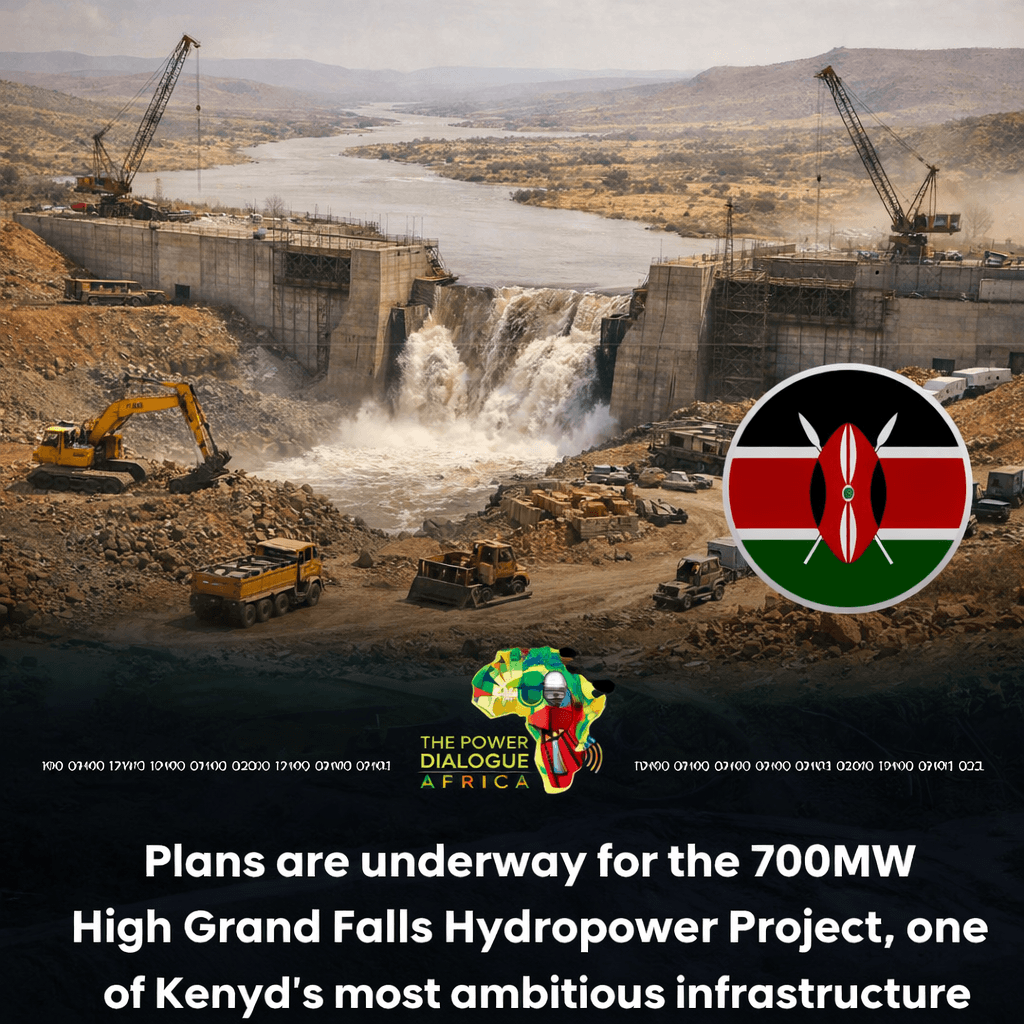
On the energy front, the dam will generate up to 700MW of renewable electricity, strengthening grid stability and supporting Kenya’s long-term transition to clean energy. On the water and agriculture side, stored water will be channelled into large-scale irrigation, with estimates indicating upto 400,000 hectares of farmland under irrigation. Key beneficiary schemes are expected to include Galana Kulalu, Bura and Garissa, directly and additional new irrigation schemes on the left side of Tana river, reinforcing national food security efforts.
Beyond energy and agriculture, High Grand Falls is also positioned as a strategic flood-control intervention. By regulating Tana River flows, the dam is expected to reduce perennial flooding in Garissa and Tana River counties, lowering economic losses and improving community resilience.
Additional projected benefits include the development of fisheries and aquaculture, as well as eco-tourism opportunities around the expansive reservoir unlocking new economic activity in regions that have historically been underserved by large infrastructure investment. More than a dam, High Grand Falls represents a convergence of energy security, food production, climate resilience and regional development.